🇨🇱 Santiago · Spanish
Learn Chilean Spanish in Santiago
Choose your first conversation
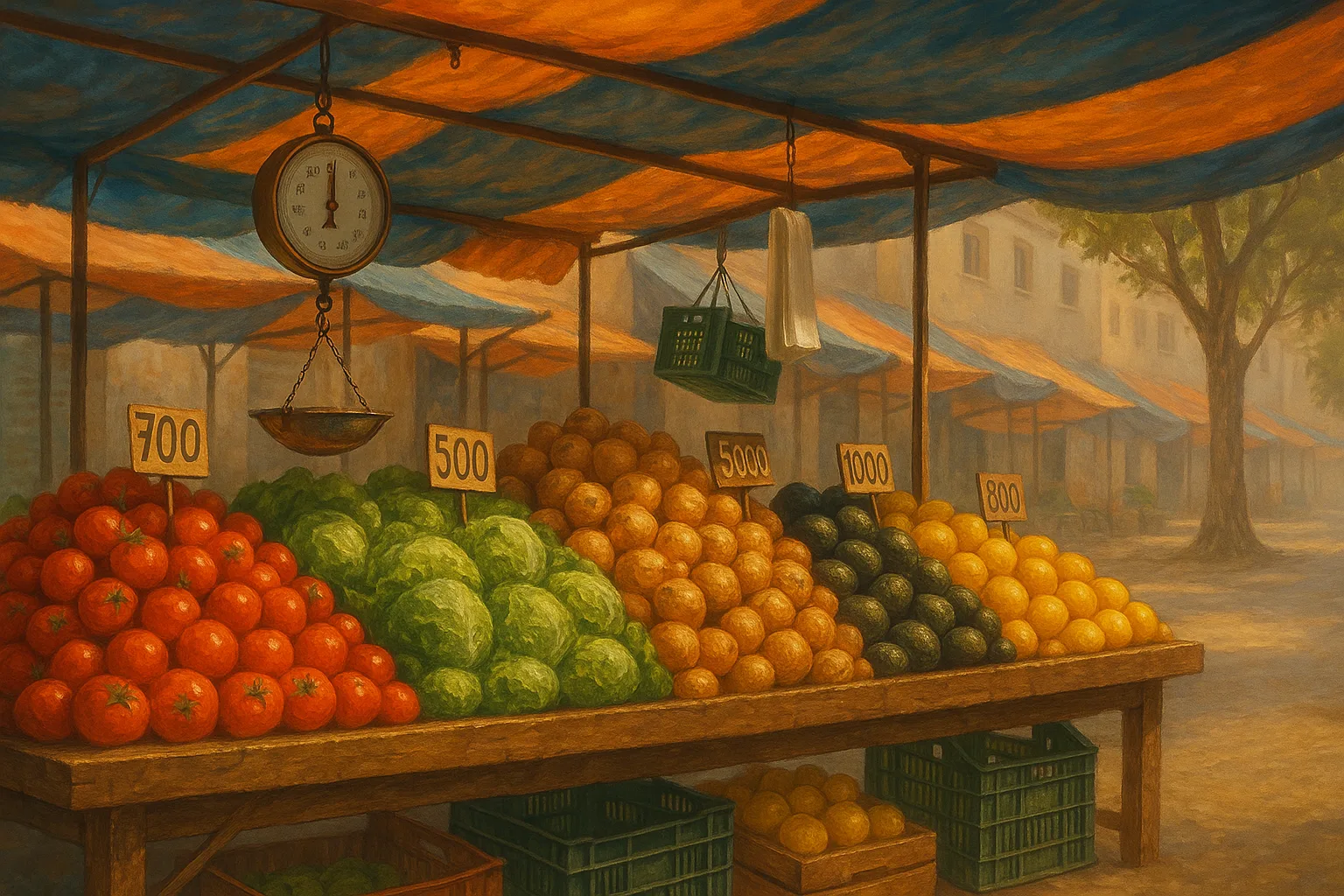
Chileans will tell you their own Spanish is the hardest, and they say it almost proudly. It runs fast, drops the ends off words, glues «po» onto half of them, and conjugates «tú» its own way — «¿cachái?», «¿querís?», «¿cómo estái?». Nacho has Puesto 42 at the Ñuñoa feria libre, the street market that takes over the block on Tuesdays and Saturdays and is swept clean by three. He calls you «casera», does the arithmetic in his head faster than you can check it, and throws the parsley in for nothing.
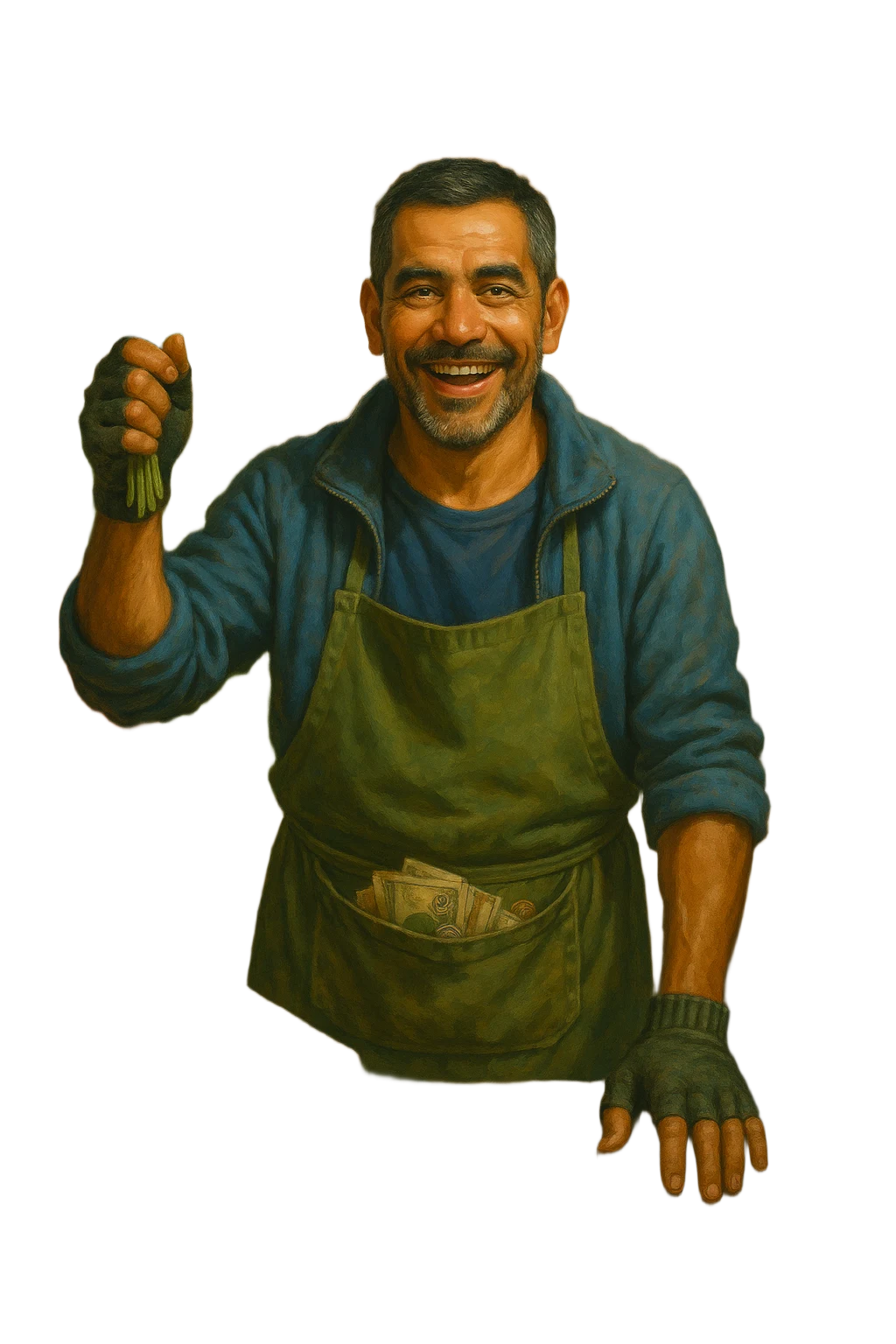
¡Casera! ¿Qué le doy?
How Santiago actually talks
What you'll pick up
- Chilean verbal voseo — the «tú» that takes «-ái» and «-ís» endings: ¿cachái?, ¿querís?, ¿tenís?, ¿cómo estái? — plus «po» stuck on the end of so much
- Prices counted in lucas, the way a market actually counts them: «dos lucas el kilo», not «dos mil pesos»
- Feria vocabulary and feria manners: casera, la yapa (the free extra), al tiro, harto, bacán — and the repair moves that keep you afloat when it comes too fast
Where you'll practise in Santiago
39 missions across 7 scenes. Each mission is a real errand with a goal, a person who talks back, and a debrief afterwards in your own language.
-
El patio de la Pancha — La Florida asado en casa
Pancha, Neighbour who runs the parrilla at her own weekend asado in La Florida, Santiago · 6 missions · A1–C1
- Say yes to the asado A1 — Pancha is lighting the parrilla this weekend and wants you there. Accept the invitation, and get the day and the time.
- Sort out the details A2 — You are going. Find out what a guest actually brings to a Chilean asado, when to really arrive, and how to get there.
- Get to know Pancha B1 — Two hours before anyone eats, with a woman who will not let you touch her coals. Ask, and she will tell you.
+ 3 more at this scene
Start speaking — free → -
Feria Libre de Ñuñoa — Puesto 42 feria libre
Nacho, Third-generation verdulero with a tarp-covered produce stall at the Ñuñoa feria libre in Santiago · 7 missions · A1–C1
- One kilo A1 — Your first stall at the feria: ask for a kilo of tomatoes, hear the price, and pay. Five short sentences.
- The once shop A2 — Buy avocados, tomatoes and bread-table things for a Chilean once — several items, prices in lucas, and a free extra.
- Puesto 42 B1 — Get past the transaction: three in the morning at Lo Valledor, a stall since 1979, and the man in the chair watching you stack tomatoes wrong.
+ 4 more at this scene
Start speaking — free → -
Farmacia Los Copihues farmacia
Carolina, Pharmacist at a small neighbourhood pharmacy in Santiago's Barrio Italia · 5 missions · A1–B2
- Something for a cold A1 — Ask Carolina for «algo para el resfrío», hear the price, and pay. Your first visit to a Santiago pharmacy.
- Sunburn + sunscreen A2 — Too much Santiago sun. Get something for the burn and a «bloqueador» for tomorrow from Carolina.
- Brand or generic? B1 — Your usual painkiller has a foreign brand name. Find it by its active ingredient — and meet Chile's yellow-band «bioequivalente».
+ 2 more at this scene
Start speaking — free →
Explore all 7 scenes
-
Hotel Casa Quillay hotel
Coni, Front-desk receptionist at a small hotel in Barrio Bellavista, Santiago · 5 missions · A1–B2
- I have a reservation A1 — Your first Chilean front desk: a hello, your name, your passport — and the key is yours.
- Check in A2 — Passport, a signature on the form, view or quiet — and when's breakfast? A full Chilean check-in.
- Get to know Coni B1 — A slow afternoon at the desk. Find out how a receptionist from La Serena ended up at the foot of San Cristóbal.
+ 2 more at this scene
Start speaking — free → -
Estación Los Héroes estación de metro
Lucho, Ticket-office clerk at Los Héroes station on the Santiago Metro · 5 missions · A1–B2
- Top up the Bip! A1 — Hand Lucho your Bip! card at the Metro window, say how much to load, and pay. Your first words underground in Santiago.
- First Bip! + a route A2 — Buy and load a Bip! card from Lucho, then ask «¿qué línea me sirve?» for Cerro Santa Lucía.
- Get to know Lucho B1 — A quiet moment at the Metro window. Find out about Lucho's old job, his family, his football team and his retirement dream.
+ 2 more at this scene
Start speaking — free → -
Picada Los Tres Ciruelos picada
Hernán, Owner and waiter of a family picada in Barrio Yungay, Santiago · 5 missions · A1–B2
- Order lunch A1 — Cazuela or pastel de choclo? A soft drink or a juice? Order your first Chilean lunch, one word at a time.
- The set lunch A2 — Salad, main, dessert and juice for one price — then «la cuenta, por favor» and the Chilean tip question.
- It's all gone B1 — No meat for you, and the humitas just ran out. Get a real recommendation, adapt, and finish with an «agüita».
+ 2 more at this scene
Start speaking — free → -
Viña El Parrón de Apalta viña
Elba, Third-generation owner of a six-hectare family viña in Apalta, Colchagua, working her own vendimia · 6 missions · A1–C1
- First taste A1 — Say hello at the harvest, ask to try a wine, and pick one of the two. Four short sentences is the whole job.
- Pick with the crew A2 — Offer to help with the vendimia: ask for the tools, learn which bunches to cut, and get sent up a row.
- Buy a case B1 — Prices in lucas, two reds to choose between, and only four bottles left of the one you want. Sort out the case and how it gets home.
+ 3 more at this scene
Start speaking — free →
Words that change in Santiago
Nacho speaks the way Santiago does, not the way a textbook does. A few of the swaps you'll hear from the first minute — the full list lives in the app's «Talk like a santiaguino» guide:
| They say | It means | You'll hear |
|---|---|---|
| guagua | baby elsewhere: bebé | La Javi tuvo guagua en marzo. THE TRAP. In Chile a guagua is a BABY (from Quechua "wawa") — and always "la guagua", even for a boy. In Puerto Rico, the Dominican Republic and Cuba the very same word is the BUS. So "me subí a la guagua" is an ordinary commute in San Juan and something alarming in Santiago. Chile's bus is "la micro". |
| micro | (city) bus elsewhere: autobús | Tomo la micro en Irarrázaval. Feminine: "la micro". Never "guagua" here (see above) and never "colectivo" — that is something else in Chile too. |
| colectivo | shared route taxi elsewhere: taxi compartido | Del metro me voy en colectivo, sale mil quinientos. A black car with a lit route number on the roof, fixed route, fixed fare, four strangers inside. In Argentina "colectivo" means the city bus — a second false friend on the same trip. |
| pega | work / a job elsewhere: trabajo | Salgo de la pega a las seis. The everyday word; "pegarse" it isn't — the verb is just "trabajar". Argentines say "laburo" for the same thing. |
| plata | money elsewhere: dinero | No me alcanza la plata hasta fin de mes. "Dinero" sounds like a bank form. Most people say plata. |
| luca | 1,000 pesos elsewhere: mil pesos | Sale ocho lucas el kilo. How prices are actually said out loud: "veinte lucas" is 20.000 pesos. Learn it or the feria will quote you numbers you can't parse. |
| palta | avocado elsewhere: aguacate | Un completo con harta palta, porfa. From Quechua, shared with Argentina and Peru — "aguacate" marks you as Mexican or Spanish instantly. |
| la once | afternoon tea-supper elsewhere: merienda | Vente a la once a las siete, hay pan amasado. Tea, bread, palta, ham, cake — around 6–9pm, and for many families it replaces dinner entirely. "Tomar once" is a whole social institution, not a snack. |
- weón / weona — dude (tone decides EVERYTHING) Written "huevón", said "weón". Between warmed-up friends it is pure affection and punctuation; the same syllables aimed at a stranger, an elder or someone serving you are a straight insult. TONE is the only difference. Visitors should understand it and not use it.
- bacán — cool / great All-purpose praise for things, plans and people. Shared with Peru and Colombia; "la raja" says the same thing far more crudely.
- fome — boring / lame Distinctively Chilean and used constantly — of films, parties, weather and people. A "fiesta fome" is the saddest thing in the language.
- carrete — party / night out The verb is "carretear"; "carretero/a" is someone who never misses one.
How Chile says 27 everyday words — next to what seven other Spanish-speaking countries say for the same thing, with a cited source for every filled cell. Or see all the words, eight ways.
Questions people ask about Santiago
Which Spanish will I hear in Santiago?
Chilean Spanish. Nacho and the other locals in the Santiago scenes speak the way people in Santiago actually speak — accent, pace, register and vocabulary. They'll say guagua for baby, micro for (city) bus and colectivo for shared route taxi, and the coach tells you when a word is local rather than universal. For the vocabulary side, see how Chile says everyday words next to seven other countries at /spanish/chile/.
Do I need to speak Spanish already?
No. Missions in Santiago run from A1 (first words: greet, order, ask for the bill) to C1 (argue a point, handle a complication, hold a real conversation). You pick a level, the scene meets you there, and the coach explains anything you missed in your own language.
What will I actually do in the Santiago scenes?
39 missions across 7 scenes — El patio de la Pancha — La Florida, Feria Libre de Ñuñoa — Puesto 42, Farmacia Los Copihues and Hotel Casa Quillay and more. Each mission is an errand with a goal: order, negotiate, describe a symptom, get directions, small-talk your way through a wait. The person you're talking to has their own agenda, so it never goes exactly to script.
Is it free?
You can start speaking without creating an account. A free account keeps your notebook and progress and comes with 10 minutes of live conversation a week, refilled every Monday; the app tells you where you stand.
How does the feedback work?
Nacho answers in Spanish, and a separate coach watches the conversation and flags what to fix — grammar, a word choice that isn't Santiago's, pronunciation — in your language, without interrupting the scene. Words you didn't know go into your notebook with the Santiago pronunciation, and after each mission you get a debrief you can review.