🇲🇿 Maputo · Portuguese
Learn Mozambican Portuguese in Maputo
Choose your first conversation
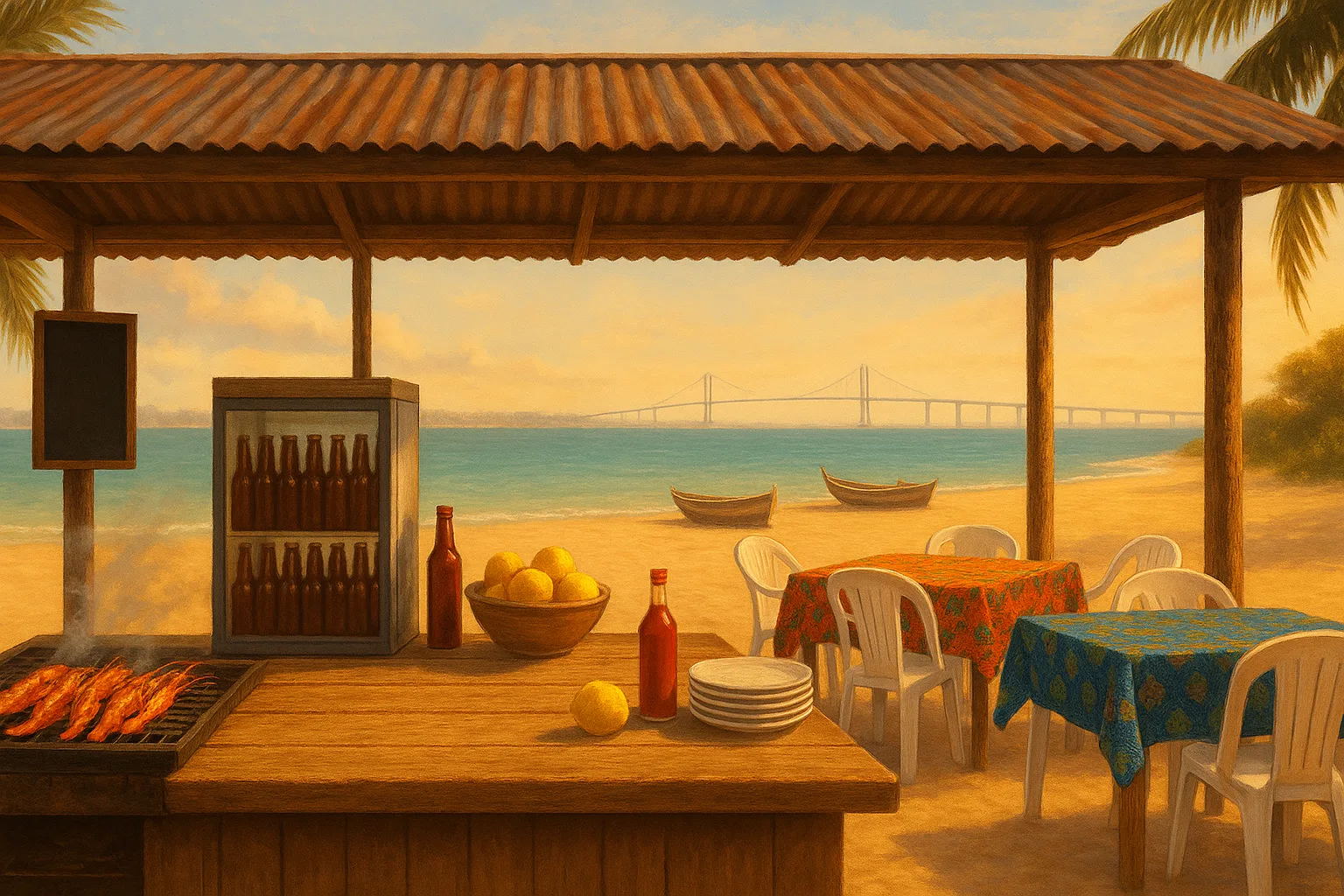
Maputo keeps the European consonants — the final -s leans toward «sh», the progressive is «estou a grelhar» — and then gives every vowel its full beat, the way Changana speakers do, so a learner who found Lisbon a wall of consonants hears every syllable here. Célia's barraca is a tin roof on posts on the beach side of the Avenida Marginal, out toward the Costa do Sol: charcoal, peri-peri prawns from the Bairro dos Pescadores, a 2M kept «maningue» cold — and a greeting that always comes before the order.
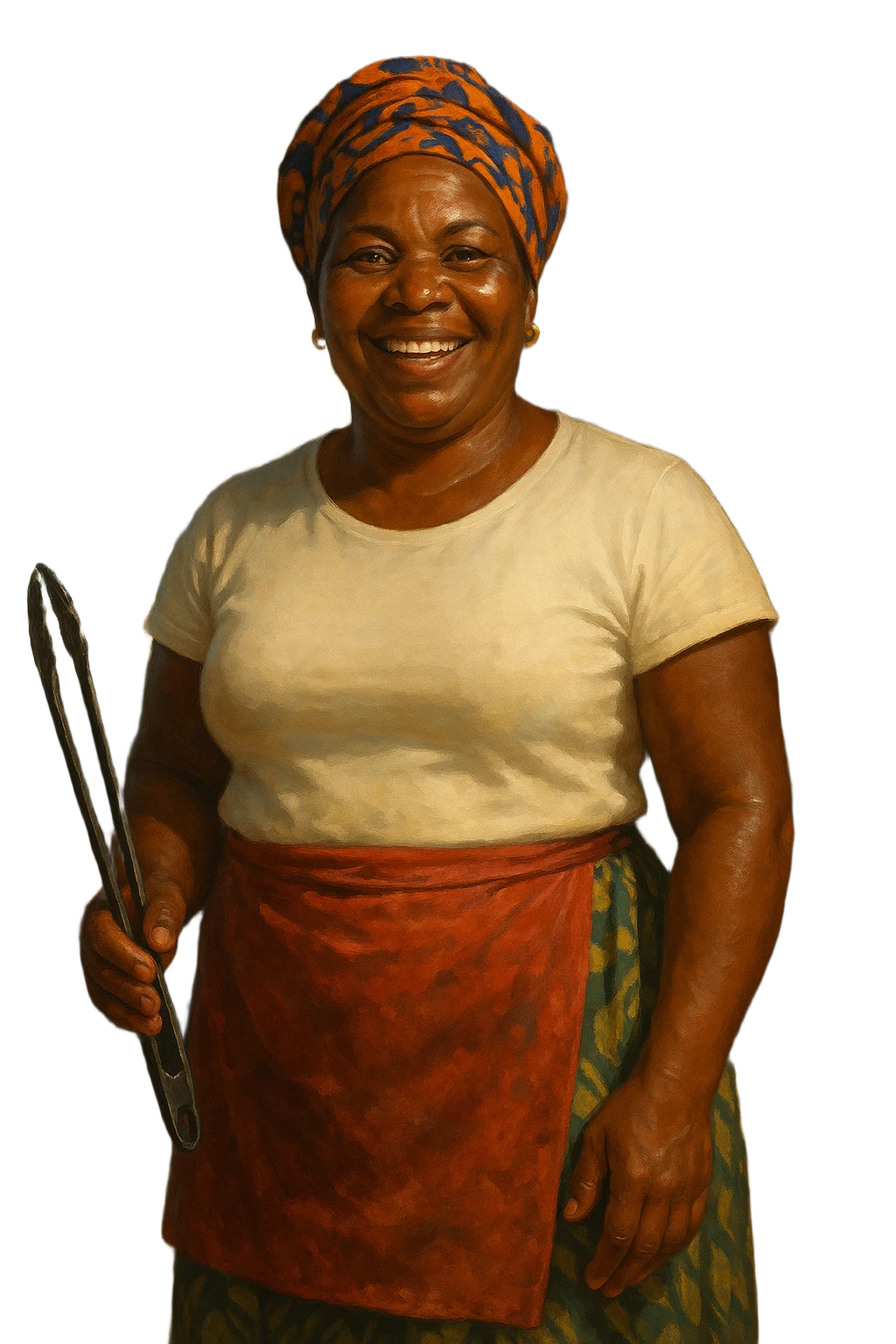
Boa tarde, filho. Está tudo bem?
How Maputo actually talks
What you'll pick up
- European consonants, Bantu-timed vowels — final -s toward «sh», «estar a + infinitivo», and not one swallowed syllable
- Everyday Maputo vocabulary that is ordinary, not slang: chapa, maningue, xima, matapa, capulana, and prices in meticais
- Courtesy before business — «Está tudo bem?» first, then the order — and «estamos juntos» to close
Where you'll practise in Maputo
19 missions across 2 scenes. Each mission is a real errand with a goal, a person who talks back, and a debrief afterwards in your own language.
-
Barraca da Célia — Avenida Marginal barraca
Célia, Owner-cook of a tin-roofed beachside barraca on the Avenida Marginal in Maputo, grilling peri-peri prawns over charcoal · 10 missions · A1–C1
- One 2M A1 — Your first barraca on the Marginal: greet Célia, order a cold 2M, hear the price in meticais, and pay. Five short sentences.
- Prawns for two A2 — A real barraca order: prawns, a side, how much piri-piri, two drinks, and the bill in meticais.
- The sea decides B1 — The tiger prawns are gone. Hear the real options, choose, negotiate the heat, and get the table with the sea behind it.
+ 7 more at this scene
Start speaking — free → -
Terminal de chapas do Museu paragem de chapas
Zeca, Cobrador on a Toyota Hiace chapa running the Museu–Costa do Sol route in Maputo, hanging out of the sliding door calling the destination · 9 missions · A1–C1
- The right chapa A1 — Your first chapa: say where you're going, hear the fare in meticais, pay Zeca, and shout «paragem!» when it's time.
- Fish market stop A2 — Check the chapa goes to the Mercado do Peixe, ask how far, get Zeca to call your stop — and get off in the right place.
- Missed the stop A2 — The Clube Naval is behind you and you didn't shout. Say so, get off at the next stop, and ask how to walk back.
+ 6 more at this scene
Start speaking — free →
Words that change in Maputo
Célia speaks the way Maputo does, not the way a textbook does. A few of the swaps you'll hear from the first minute — the full list lives in the app's «Talk like a maputense» guide:
| They say | It means | You'll hear |
|---|---|---|
| chapa | shared minibus taxi elsewhere: carrinha / autocarro | Apanho o chapa para a Costa do Sol. THE way Maputo moves — a white minibus on a fixed route for a fixed fare. It is «o chapa» (masculine). Portugal has no equivalent; Brazil says «lotação» or «van». |
| machimbombo | bus elsewhere: autocarro / ônibus | O machimbombo passa de meia em meia hora. The big city bus. Mozambique (and Angola) say «machimbombo»; Portugal «autocarro»; Brazil «ônibus». |
| maningue | very / a lot elsewhere: muito | Está maningue calor hoje. The signature Mozambican intensifier — «maningue bom», «maningue gente», «maningue longe». Everyone uses it; it is not slang. |
| txopela | motorised three-wheeler taxi elsewhere: tuk-tuk / mototáxi | Vou de txopela até à Baixa. The auto-rickshaw. The «tx» is said like English «ch». |
| capulana | printed wrap cloth elsewhere: pano / tecido estampado | Comprei duas capulanas no Xipamanine. The printed cotton cloth worn as a wrap, headscarf or baby sling and used as a tablecloth. No standard equivalent — say «capulana» everywhere in Mozambique. |
| machamba | family field or garden plot elsewhere: horta / campo | Aos fins-de-semana vamos à machamba. A cultivated plot, usually outside town. From Swahili «shamba». Universal in Mozambique. |
| xima | stiff maize porridge elsewhere: papa de milho | Camarão com xima, se faz favor. The staple — eaten with the hand alongside a stew or grilled fish. The «x» is said like English «sh». |
| matapa | cassava-leaf stew with peanut and coconut elsewhere: — | A matapa da minha avó leva camarão pequeno. The national dish of the south. No standard equivalent. |
- mano / mana — bro / sis Slang. How anyone your own age addresses you on the street or the chapa; warm, not rude.
- chefe — boss (to a man you don't know) Slang address. Friendly and neutral — the way you call a waiter, a cobrador or a stranger. «Boss» (from English) is heard too.
- nice — nice / cool Slang. The English word, used as an ordinary adjective — «tá nice», «maningue nice».
- fixe — cool / great Slang, shared with Portugal. Pronounced «feesh».
The full «Talk like a maputense» guide — every word, phrase and habit of speech the Maputo characters use, with what the other Portugueses say instead.
Questions people ask about Maputo
Which Portuguese will I hear in Maputo?
Mozambican Portuguese. Célia and the other locals in the Maputo scenes speak the way people in Maputo actually speak — accent, pace, register and vocabulary. They'll say chapa for shared minibus taxi, machimbombo for bus and maningue for very / a lot, and the coach tells you when a word is local rather than universal.
Do I need to speak Portuguese already?
No. Missions in Maputo run from A1 (first words: greet, order, ask for the bill) to C1 (argue a point, handle a complication, hold a real conversation). You pick a level, the scene meets you there, and the coach explains anything you missed in your own language.
What will I actually do in the Maputo scenes?
19 missions across 2 scenes — Barraca da Célia — Avenida Marginal and Terminal de chapas do Museu. Each mission is an errand with a goal: order, negotiate, describe a symptom, get directions, small-talk your way through a wait. The person you're talking to has their own agenda, so it never goes exactly to script.
Is it free?
You can start speaking without creating an account. A free account keeps your notebook and progress and comes with a monthly allowance of speaking minutes; the app tells you where you stand.
How does the feedback work?
Célia answers in Portuguese, and a separate coach watches the conversation and flags what to fix — grammar, a word choice that isn't Maputo's, pronunciation — in your language, without interrupting the scene. Words you didn't know go into your notebook with the Maputo pronunciation, and after each mission you get a debrief you can review.