🇲🇽 Mexico City · Spanish
Learn Spanish in Mexico City
Choose your first conversation
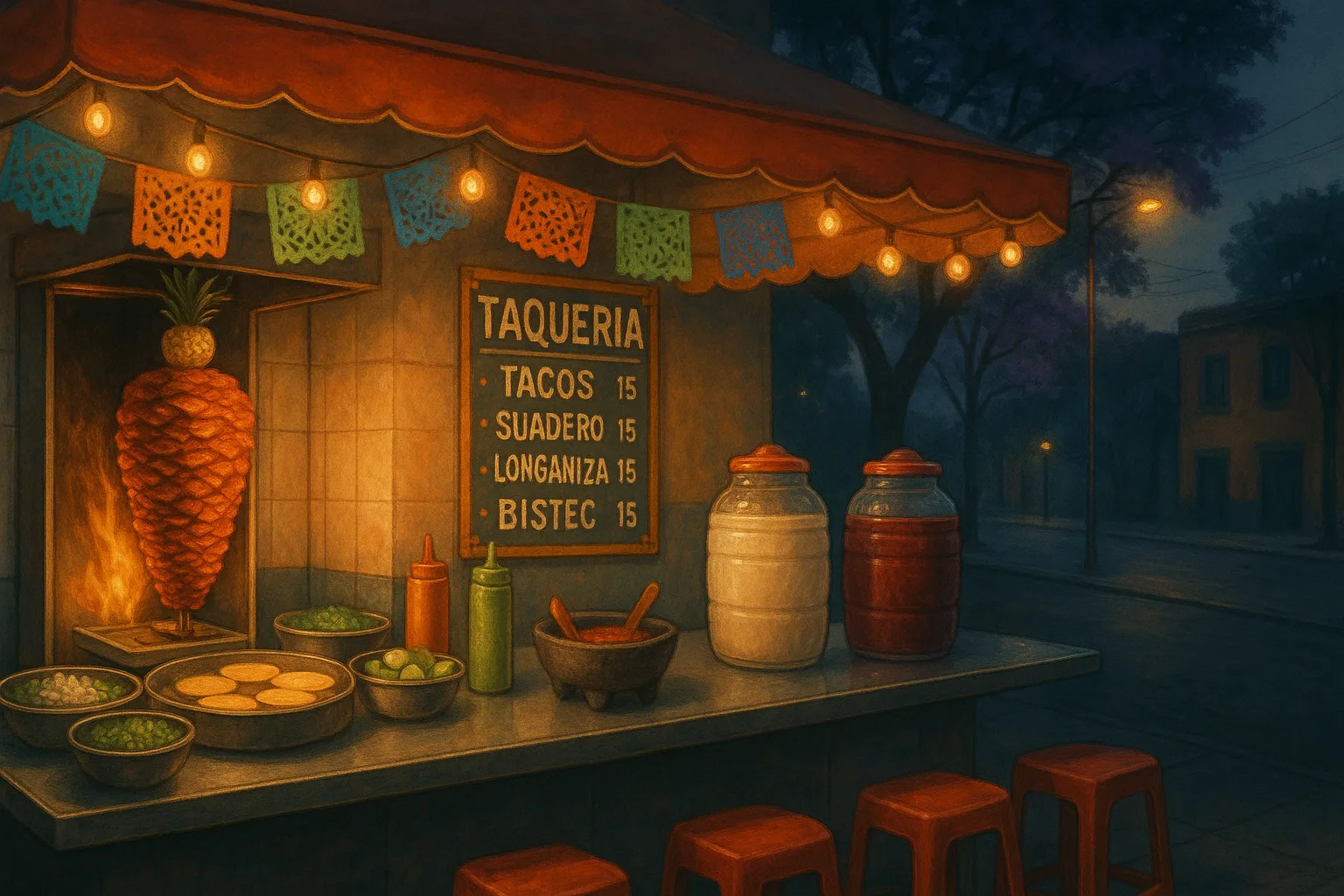
Mexican Spanish never says «vosotros» — it's «ustedes» for everyone, «¿mande?» when you miss something, and a diminutive on half the nouns in the room. You learn it standing at Rosa's trompo in Narvarte, ordering al pastor by count and filling while she flicks the pineapple off the knife without looking.
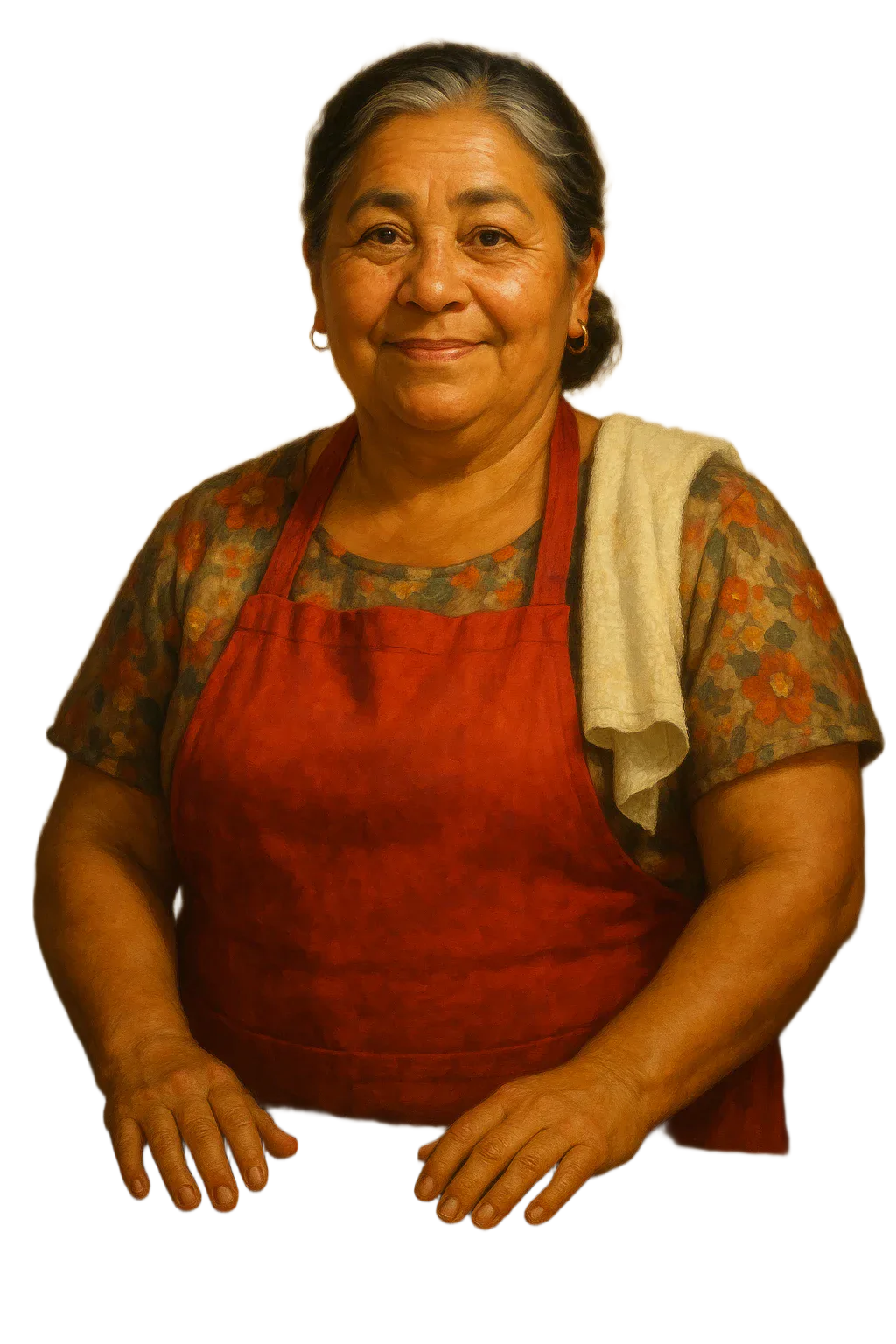
¡Buenas, joven! ¿Qué le doy?
How Mexico City actually talks
What you'll pick up
- «Ustedes» for every plural «you» — «vosotros» doesn't exist here — and «¿mande?», the Mexican way to ask anyone to repeat
- Taquería vocabulary a course skips: pastor, suadero, «con todo», «para llevar», a refresco «de sabor»
- Chilango speed and warmth — órale, ándale, este… — plus «ahorita», which stretches from this second to eventually
Where you'll practise in Mexico City
53 missions across 9 scenes and 1 guided tour. Each mission is a real errand with a goal, a person who talks back, and a debrief afterwards in your own language.
-
Aeropuerto Valle de Anáhuac — Terminal 2 aeropuerto
Maricruz, Counter and gate agent for Aerolíneas Jacaranda at Valle de Anáhuac airport, Mexico City · 6 missions · A1–C1
- Checking the bag A1 — One bag, one question at a time. The shortest trip through an airline counter there is.
- Three kilos over A2 — 26 kilos, 23 allowed. Pay the excess, or open the bag right there on the floor and move things. Your call.
- Through security B1 — Laptop out, liquids in a bag, belt off, pockets empty — and the pat-down nobody explains. Ask, because she volunteers nothing.
+ 3 more at this scene
Start speaking — free → -
Oficina Postal La Roma oficina de correos
Leti, Window clerk at a neighborhood post office in Mexico City · 6 missions · A1–A2
- Meet Leti A1 — Nothing to send. Trade names with the clerk, ask where she's from, and say where you're from.
- Send a postcard A1 — Buy one stamp, say where the postcard is going, pay, and mail it. Leti walks you through every step.
- Declare the box A1 — Leti fills in the customs form while you tell her what's inside and who each thing is for. You talk, she writes.
+ 3 more at this scene
Start speaking — free → -
Farmacia Jacaranda farmacia
Araceli, Pharmacist at a neighbourhood farmacia with a doctor's consultorio next door, in Colonia Narvarte, Mexico City · 5 missions · A1–B2
- Mosquito bites A1 — Itchy bites after a night in the city. Ask Araceli for something for them, pick cream or spray, and pay.
- Upset stomach A2 — Traveller's tummy in Mexico City. Explain it to Araceli, get a suero oral, hear her advice, and pay.
- Get to know Araceli B1 — A slow hour at Farmacia Jacaranda. Find out where Araceli is from, why chemistry, and what she dances on Saturdays.
+ 2 more at this scene
Start speaking — free →
Explore all 9 scenes
-
Hotel Casa Almendra hotel boutique
Paulina, Front-desk receptionist at a boutique hotel in Roma Norte, Mexico City · 5 missions · A2–C1
- Check-in A2 — Arrive at a Roma Norte boutique hotel — give your name, hand over your ID, pick your bed, and get your key and wifi.
- Hotel practicalities B1 — Ask the front desk the real questions: breakfast hours, extra towels, the rooftop alberca, and how tipping works.
- Get to know Paulina B1 — A quiet lobby, a talkative desk. Find out how Paulina became a hotelier, why Roma Norte, and what she dreams of.
+ 2 more at this scene
Start speaking — free → -
Frutas y Antojitos Don Chucho mercado
Chucho, Fruit and quesadilla vendor at a Coyoacán covered market · 7 missions · A1–B2
- One mango A1 — Buy a single mango at a Coyoacán market stall and pay for it. No weighing, no haggling — just one.
- Tell Chucho what you cooked A1 — Yesterday's fruit, today's report: tell Chucho what you made, what you ate, and how it came out.
- Mango Saturday A2 — The ataulfo lands Saturday and you're invited — at seven a.m. Negotiate a better hour and lock the plan with Chucho.
+ 4 more at this scene
Start speaking — free → -
Metro Hidalgo estación de metro
Gerardo, Ticket-booth clerk (taquillero) at Metro Hidalgo station, Mexico City · 5 missions · A1–B2
- Top up your card A1 — Your Metro card is empty. Ask Gerardo at the taquilla to top it up and pay. Your first words underground.
- Way to Coyoacán A2 — Ask the Mexican way — line, colour, direction — and say the route back before you head down.
- Get to know Gerardo B1 — Twenty years in a Metro booth. Find out how Gerardo grew up on the trains, what he collects, and where he wants to ride next.
+ 2 more at this scene
Start speaking — free → -
La Lagartija mezcalería
Renata, A local you met at the Wednesday language exchange in Roma Norte · 5 missions · A1–C1
- Make a date with Renata A1 — The language exchange is ending. Plan a drink: pick a day and a time, then say the plan back.
- First-date drinks A2 — Saturday night at La Lagartija: order drinks for two, make a toast, and talk about what you like.
- Get to know Renata B1 — On your date, find out about her work, her family, her free time, and the dream behind her Italian lessons.
+ 2 more at this scene
Start speaking — free → -
Taquería Doña Rosa taquería
Rosa, Taquera at a beloved Mexico City taco stand · 8 missions · A1–C1
- Wrong taco A1 — Pastor ordered, suadero served. Tell Rosa it isn't right and get the taco you asked for.
- Your first taco A1 — One taco, a few pesos, your first words at a Mexico City taquería.
- Rosa's stories A2 — The rush is over. Ask Rosa about her father's recipe, the five-a.m. salsas, and the dream with little stools for everyone.
+ 5 more at this scene
Start speaking — free → -
Celulares Ajolote tienda de celulares
Efrén, Clerk at a small independent mobile-phone and SIM shop in Colonia Narvarte, Mexico City · 6 missions · A1–C1
- Doscientos de recarga A1 — Ask for a top-up, say your number, say the amount, pay. Wait for the buzz.
- Un chip mexicano A2 — New in the country, passport in hand. Prepago or plan? How many gigas? Test it before you walk out.
- El ajolote de la caja B1 — Nobody's waiting. Ask about the axolotl, the repair bench, the night classes — and the note under the counter.
+ 3 more at this scene
Start speaking — free →
Tours
- Antojitos de la CDMX with Ximena, Street-food walking-tour guide in Mexico City — 5 stops: Tacos al pastor en el trompo, Tamales y atole de la esquina, Tlacoyos y quesadillas de mercado, Churros con chocolate and Café de olla y pan dulce.
Words that change in Mexico City
Rosa speaks the way Mexico City does, not the way a textbook does. A few of the swaps you'll hear from the first minute — the full list lives in the app's «Talk like a chilango» guide:
| They say | It means | You'll hear |
|---|---|---|
| jitomate | (red) tomato elsewhere: tomate | ¿Le pongo jitomate a la torta? In central Mexico the red tomato is "jitomate"; a bare "tomate" often means the green tomatillo. |
| elote | corn on the cob elsewhere: mazorca de maíz | Un elote con todo, por favor. Street-corner staple; "esquites" are the off-the-cob cup version. |
| torta | filled bread-roll sandwich elsewhere: bocadillo / sándwich | Una torta de milanesa para llevar. In Mexico a "torta" is a sandwich on a bolillo or telera — not a cake (that's "pastel"). |
| camión | (city) bus elsewhere: autobús | Tomo el camión al centro. In CDMX you'll also hear "pesero" or "micro" for the smaller green route buses. |
| chamarra | jacket elsewhere: chaqueta | Trae chamarra, en la noche hace frío. Everyday word in Mexico; "chaqueta" is best avoided in Mexican slang. |
| alberca | swimming pool elsewhere: piscina | El hotel tiene alberca en la azotea. "Piscina" is understood but sounds foreign in Mexico. |
| popote | drinking straw elsewhere: pajita | Sin popote, gracias. From the Nahuatl "popotl" — one of many Nahuatl words in Mexican Spanish. |
| chamba | work / a job elsewhere: trabajo | Mañana tengo mucha chamba. Casual but widespread; the verb is "chambear". |
- güey — dude / man Constant between friends (also spelled "wey") — but never with elders, staff, or strangers.
- chido — cool / nice Everyday praise; interchangeable with "padre".
- padrísimo — awesome From "padre" (cool) — "¡qué padre!" is the classic Mexican compliment.
- la neta — the truth / for real "¿Neta?" alone means "seriously?"; "ser la neta" is to be the real deal.
How Mexico says 27 everyday words — next to what seven other Spanish-speaking countries say for the same thing, with a cited source for every filled cell. Or see all the words, eight ways.
Questions people ask about Mexico City
Which Spanish will I hear in Mexico City?
Mexican Spanish. Rosa and the other locals in the Mexico City scenes speak the way people in Mexico City actually speak — accent, pace, register and vocabulary. They'll say jitomate for (red) tomato, elote for corn on the cob and torta for filled bread-roll sandwich, and the coach tells you when a word is local rather than universal. For the vocabulary side, see how Mexico says everyday words next to seven other countries at /spanish/mexico/.
Do I need to speak Spanish already?
No. Missions in Mexico City run from A1 (first words: greet, order, ask for the bill) to C1 (argue a point, handle a complication, hold a real conversation). You pick a level, the scene meets you there, and the coach explains anything you missed in your own language.
What will I actually do in the Mexico City scenes?
53 missions across 9 scenes — Aeropuerto Valle de Anáhuac — Terminal 2, Oficina Postal La Roma, Farmacia Jacaranda and Hotel Casa Almendra and more. Each mission is an errand with a goal: order, negotiate, describe a symptom, get directions, small-talk your way through a wait. The person you're talking to has their own agenda, so it never goes exactly to script. There is also a guided tour — Antojitos de la CDMX — where the guide talks and you ask.
Is it free?
You can start speaking without creating an account. A free account keeps your notebook and progress and comes with 10 minutes of live conversation a week, refilled every Monday; the app tells you where you stand.
How does the feedback work?
Rosa answers in Spanish, and a separate coach watches the conversation and flags what to fix — grammar, a word choice that isn't Mexico City's, pronunciation — in your language, without interrupting the scene. Words you didn't know go into your notebook with the Mexico City pronunciation, and after each mission you get a debrief you can review.