🇰🇪 Nairobi · English
Learn Kenyan English in Nairobi
Choose your first conversation
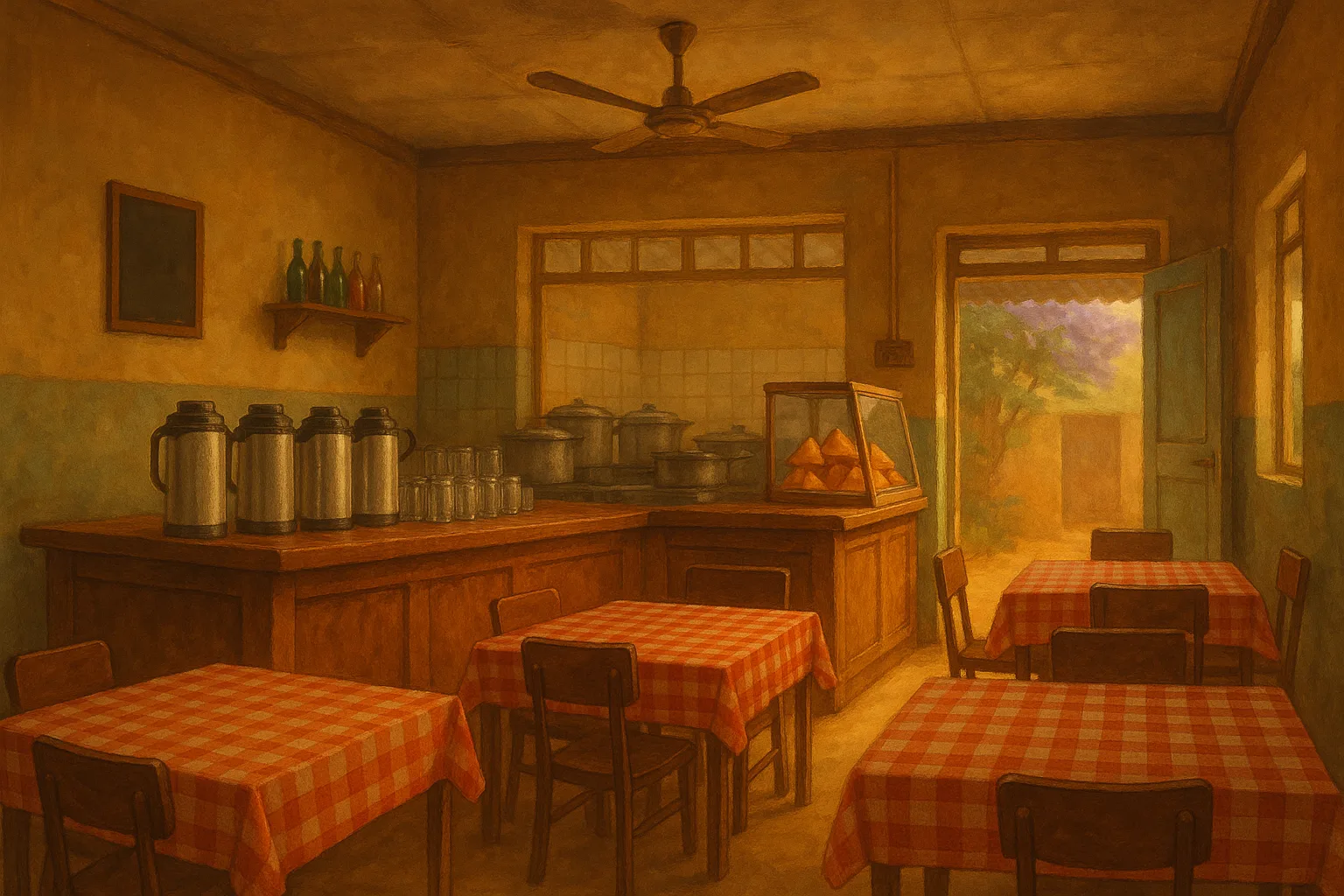
Kenyan English is British-derived and evenly stressed — syllables given their full weight — and it carries Swahili in every other sentence: sawa, pole, karibu, asante. Wanjiru pours the chai at her hotel just off Kimathi Street — in Kenya a «hotel» is often where you eat, not where you sleep — and you pay the way most of the country pays: M-PESA, to the till number.
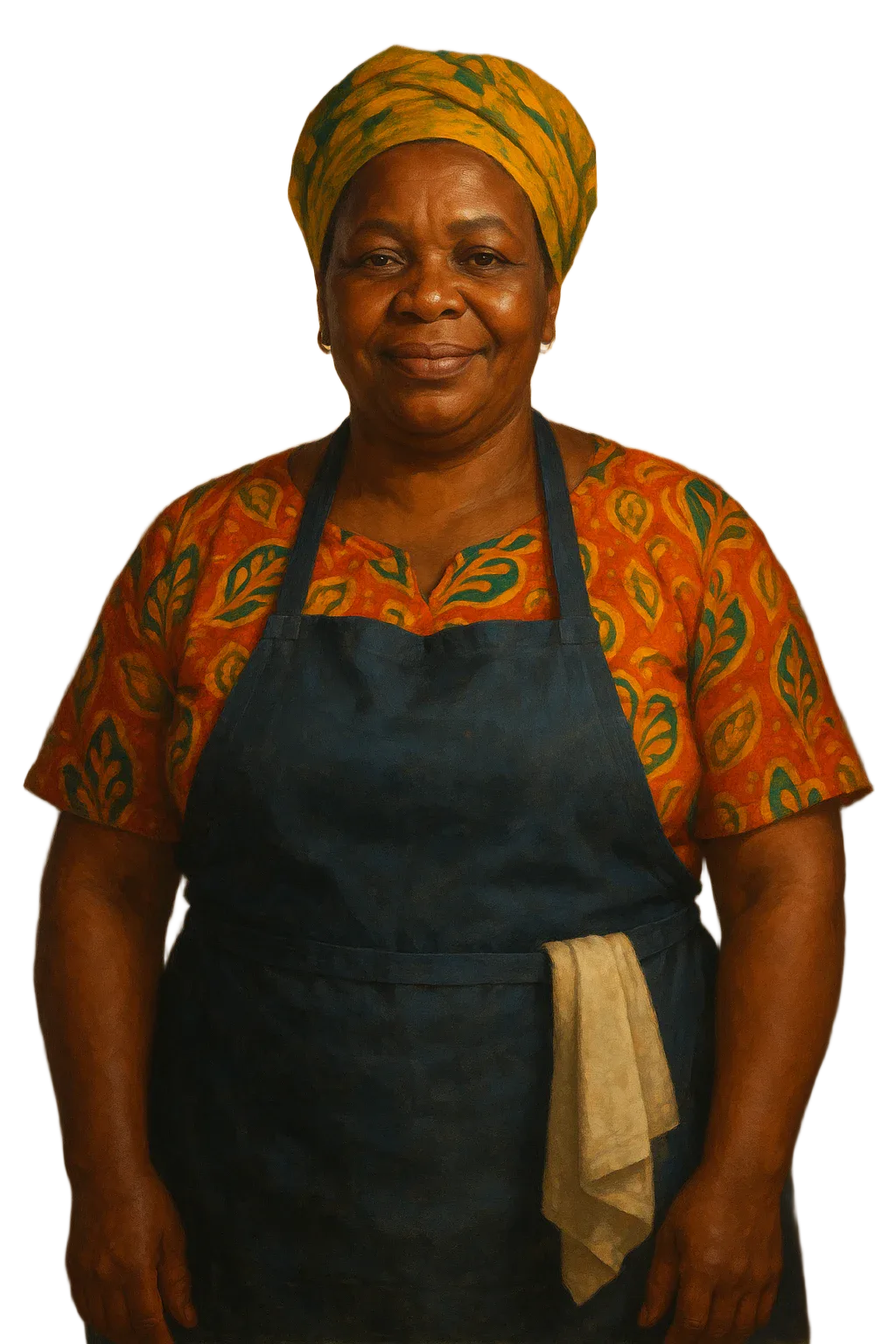
Karibu, my dear! What can I get you?
How Nairobi actually talks
What you'll pick up
- Everyday Swahili inside the English: sawa (okay), pole (sorry — sympathy, not apology), karibu (welcome), asante (thanks) — never lectured, always obvious from the situation
- The even, syllable-timed Kenyan melody — few swallowed vowels, gentler stress peaks — tuned into our pronunciation coaching
- Nairobi words that catch visitors out: a «hotel» is often an eatery, a matatu is the bus, fifty «bob» is fifty shillings
Where you'll practise in Nairobi
25 missions across 3 scenes and 1 guided tour. Each mission is a real errand with a goal, a person who talks back, and a debrief afterwards in your own language.
-
Wanjiru's Hotel café
Wanjiru, Owner of a busy café near Kimathi Street, Nairobi · 9 missions · A1–C1
- Why "hotel"? A1 — No order today — just ask. Find out from Wanjiru why a place with no beds is called a hotel.
- Chai and mandazi A1 — One chai, a few shillings, your first English in a Nairobi café.
- Cold chai A2 — Cold chai and the wrong plate. Tell Wanjiru about both, one at a time, and get them sorted.
+ 6 more at this scene
Start speaking — free → -
Baraka Duka duka
Boniface, Owner of a neighbourhood duka in a Nairobi estate · 9 missions · A1–C1
- Buy one egg A1 — Buy a single egg at the hatch of a Nairobi duka — greet Boniface, ask, pay in coins, and say thanks.
- Short change A1 — Fifty bob is missing from your change. Say something, count it with Boniface, and get it put right.
- Last night I cooked A1 — Nothing to buy — Boniface asks what you cooked last night. Tell him in three short sentences.
+ 6 more at this scene
Start speaking — free → -
Mwangi Carvings & Curios market
Otis, Curio-stall trader at the Maasai Market, Nairobi · 7 missions · A1–B2
- One bracelet A1 — Buy one beaded bracelet from Otis and pay. No haggling today — one price, a few words, and it's yours.
- Come back tomorrow A2 — The heron isn't finished. Agree a day and a time to come back, and how you'll find the stall again.
- Who made this? A2 — No haggling today. Ask Otis who carves the animals, how long one takes, and what wood he uses.
+ 4 more at this scene
Start speaking — free →
Tours
- Nairobi Bites with Zawadi, Food-tour guide in Nairobi — 5 stops: Chai and mandazi, Nyama choma na kachumbari, Ugali na sukuma wiki, Samosas and bhajias and Mutura — the brave finish.
Words that change in Nairobi
Wanjiru speaks the way Nairobi does, not the way a textbook does. A few of the swaps you'll hear from the first minute — the full list lives in the app's «Talk like a Nairobian» guide:
| They say | It means | You'll hear |
|---|---|---|
| matatu | shared minibus (public transport) elsewhere: minibus | I take a matatu to town every morning. THE way Nairobi moves. Locals rarely say 'minibus' — it is a matatu, and the route number matters. |
| boda boda | motorbike taxi elsewhere: motorbike taxi | Traffic is bad — just take a boda boda. Often shortened to 'boda'. Fastest way through a Nairobi jam. |
| duka | small neighbourhood shop elsewhere: corner shop | Pass by the duka and get some milk. Swahili, and the everyday word — a tiny shop that sells a bit of everything. |
| chai | tea (milky, sweet, often spiced) elsewhere: tea | Come in for chai — it is still hot. The default drink of Kenya. 'Chai' means the whole ritual: strong tea boiled with milk and sugar. |
| hotel | a small café or eatery — NOT a place with rooms elsewhere: local eatery | We had lunch at the hotel near the stage. The classic surprise: in Kenyan English a 'hotel' is a local restaurant. A place with beds is a 'lodging' or a big-name hotel. |
| sukuma wiki | braised collard greens elsewhere: collard greens | Give me ugali and sukuma wiki, please. Literally 'push the week' in Swahili — the affordable greens that stretch a budget to payday. |
| M-PESA | phone-based money transfer — how most people pay elsewhere: mobile money | No cash? Just send it by M-PESA to the till number. Kenya invented everyday mobile money. Shops post a till number; you pay from your phone and show the confirmation SMS. |
| bob | Kenyan shillings (money) elsewhere: shillings | The mandazi is twenty bob. 'Fifty bob' = 50 shillings. Casual and very common. |
- mzee — respected older man / 'sir' Respectful and warm, for an older man. Between friends it can be playful, like 'boss'.
- bwana — man / mister (exclamation) Literally 'mister', used like 'man!' for emphasis. Friendly, everyday.
- chapaa — money (Sheng) Sheng — Nairobi's Swahili-English street mix. 'Doo' is another money word you'll hear.
- poa — cool / fine The standard cool-kid answer to a greeting; relaxed and friendly.
Questions people ask about Nairobi
Which English will I hear in Nairobi?
Kenyan English. Wanjiru and the other locals in the Nairobi scenes speak the way people in Nairobi actually speak — accent, pace, register and vocabulary. They'll say matatu for shared minibus (public transport), boda boda for motorbike taxi and duka for small neighbourhood shop, and the coach tells you when a word is local rather than universal.
Do I need to speak English already?
No. Missions in Nairobi run from A1 (first words: greet, order, ask for the bill) to C1 (argue a point, handle a complication, hold a real conversation). You pick a level, the scene meets you there, and the coach explains anything you missed in your own language.
What will I actually do in the Nairobi scenes?
25 missions across 3 scenes — Wanjiru's Hotel, Baraka Duka and Mwangi Carvings & Curios. Each mission is an errand with a goal: order, negotiate, describe a symptom, get directions, small-talk your way through a wait. The person you're talking to has their own agenda, so it never goes exactly to script. There is also a guided tour — Nairobi Bites — where the guide talks and you ask.
Is it free?
You can start speaking without creating an account. A free account keeps your notebook and progress and comes with 10 minutes of live conversation a week, refilled every Monday; the app tells you where you stand.
How does the feedback work?
Wanjiru answers in English, and a separate coach watches the conversation and flags what to fix — grammar, a word choice that isn't Nairobi's, pronunciation — in your language, without interrupting the scene. Words you didn't know go into your notebook with the Nairobi pronunciation, and after each mission you get a debrief you can review.