🇦🇴 Lubango · Portuguese
Learn Angolan Portuguese in Lubango
Choose your first conversation
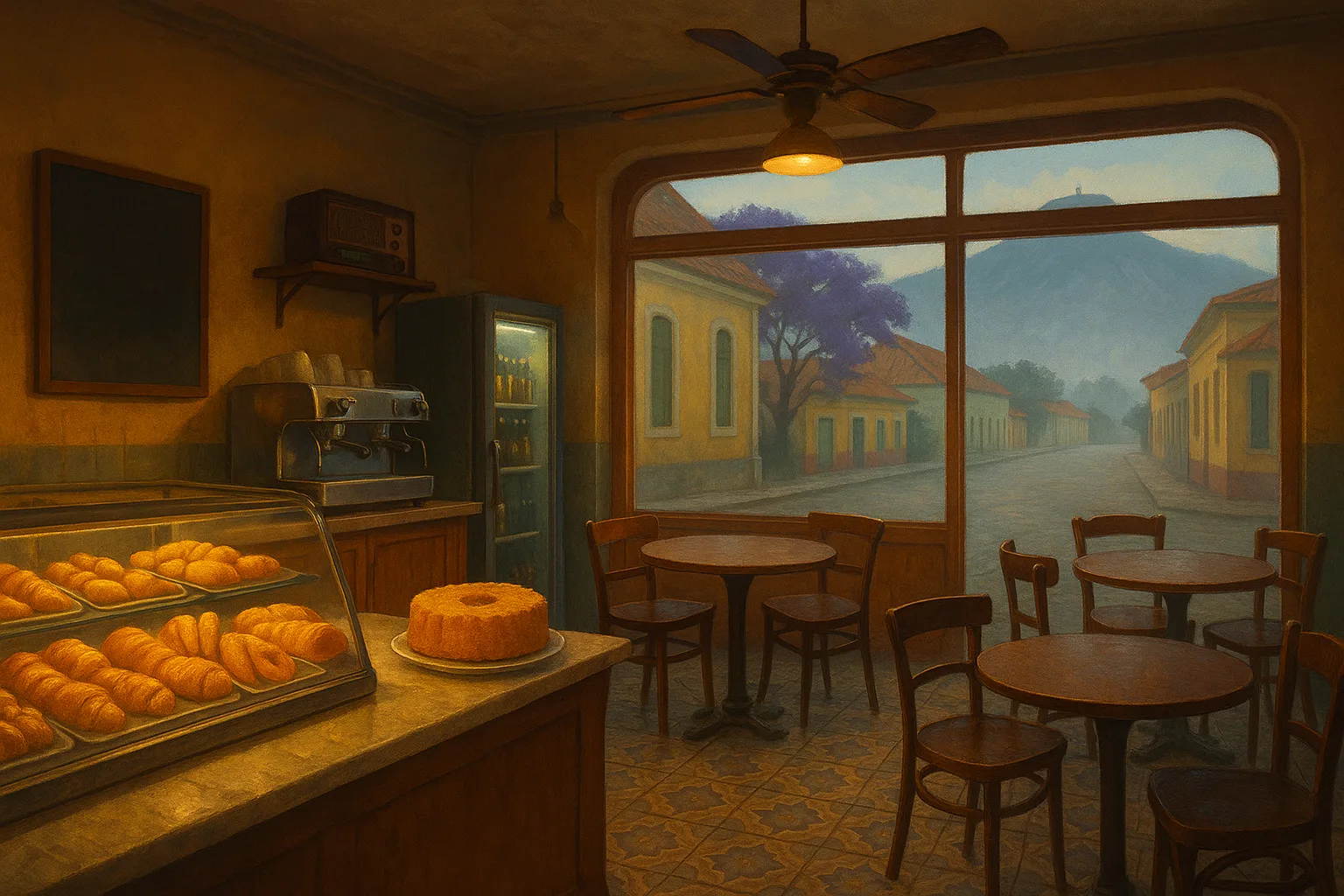
Angolan Portuguese sits on a European base — «estou a tirar o café», «casa de banho», «sumo» — but it doesn't swallow its vowels the way Lisbon does: every syllable is there, the rhythm is even, and the everyday words are its own — «ya» for yes, «bué» for a lot, «né?» on the end of half the sentences. Ilda has run the Pastelaria Neblina in the old Bairro Comercial for nineteen years: she opens at six, when the cacimbo cold is worst, bakes the bolo de fuba herself before dawn, and when your word doesn't land she lifts the thing off the counter and names it.
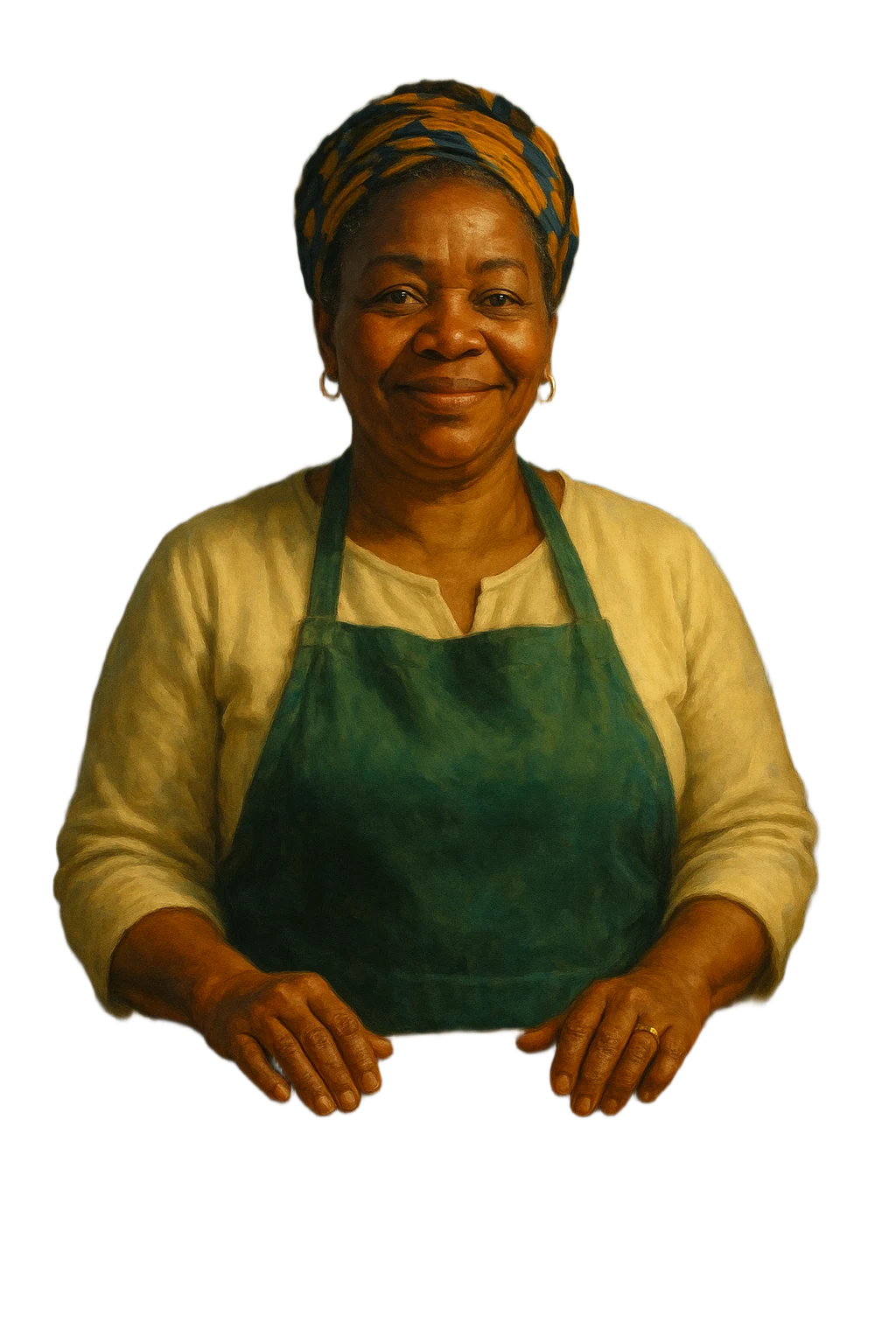
Bom dia! Está frio bué hoje, né?
How Lubango actually talks
What you'll pick up
- European grammar with full Angolan vowels — «estar a + infinitivo», never the Brazilian gerund, and a tapped «r» you can actually hear
- Everyday Angolan words that are vocabulary, not slang: candongueiro, gasosa, kwanzas, funge, fuba, «não há maka»
- Respect built into the address — «mais velho», «mais velha», «tia» — and «ya», «bué», «né?» from the first minute
Where you'll practise in Lubango
19 missions across 2 scenes. Each mission is a real errand with a goal, a person who talks back, and a debrief afterwards in your own language.
-
Paragem dos candongueiros — Praça da Mutundo paragem de candongueiros
Kito, Cobrador (fare collector) of a blue-and-white candongueiro minibus on the Mutundo–Lage–Arimba route in Lubango · 9 missions · A1–C1
- Get on the right van A1 — Ask «vai para a Lage?», climb in, and hand over a hundred and fifty kwanzas.
- Big note, no change A2 — The fare is 150 and you only have a 2,000 note. Say the problem, choose a fix, and count your change.
- Só aqui! A2 — Pay, ask him to warn you at the airport turn, and learn the two words that stop a candongueiro.
+ 6 more at this scene
Start speaking — free → -
Pastelaria Neblina — Bairro Comercial pastelaria
Ilda, Owner behind the counter of a small pastelaria in Lubango's old Bairro Comercial, below the Serra da Leba · 10 missions · A1–C1
- Order one coffee A1 — Your first words in Lubango: a greeting, «um café», and the kwanzas across the counter.
- Coffee and a cake A2 — Ask what that yellow cake is, choose between here and takeaway, and settle up in kwanzas.
- Breakfast for two B1 — The nata are gone and the card machine is dead. Substitute, pay in cash, and get directions to the Cristo Rei.
+ 7 more at this scene
Start speaking — free →
Words that change in Lubango
Ilda speaks the way Lubango does, not the way a textbook does. A few of the swaps you'll hear from the first minute — the full list lives in the app's «Talk like an angolano» guide:
| They say | It means | You'll hear |
|---|---|---|
| candongueiro | shared minibus taxi elsewhere: táxi colectivo / autocarro | Apanho o candongueiro na praça. The blue-and-white Toyota minibuses that carry the city. You pay the cobrador, never the driver. |
| cobrador | fare collector on a candongueiro elsewhere: revisor | Dá o dinheiro ao cobrador. Hangs out of the sliding door calling the route. |
| kupapata | motorbike taxi elsewhere: mototáxi | De kupapata é mais rápido. Common in Lubango, Huambo and Benguela. Ask for a helmet: «pede capacete». |
| machimbombo | bus (the big kind) elsewhere: autocarro / ônibus | O machimbombo passa às sete. Angolan and Mozambican. Brazil says «ônibus», Portugal «autocarro». |
| praça | market — and the taxi rank beside it elsewhere: mercado / paragem | Vou à praça comprar tomate. «A praça» is where you shop AND where the candongueiros wait. |
| quitanda | a market stall elsewhere: banca | A minha mãe tem uma quitanda na Mutundo. From Kimbundu «kitanda». Also the small shop that sells from it. |
| zungueira | woman street vendor elsewhere: vendedora ambulante | Comprei bananas a uma zungueira. From «zunga», selling on foot with a basin on the head. |
| kinguila | street money-changer elsewhere: cambista | O kinguila troca dólares ali na esquina. Informal exchange, usually under a tree near the praça. |
- bué — a lot / very Angolan-born; now common in Portugal too. Slang, but everyone says it.
- kamba — friend / mate From Kimbundu. Casual, warm.
- mambo — thing / stuff Any thing; «esse mambo» = that thing / that business.
- maka — problem / trouble / an argument «Fazer maka» = to make trouble; «sem maka» = no problem.
The full «Talk like an angolano» guide — every word, phrase and habit of speech the Lubango characters use, with what the other Portugueses say instead.
Questions people ask about Lubango
Which Portuguese will I hear in Lubango?
Angolan Portuguese. Ilda and the other locals in the Lubango scenes speak the way people in Lubango actually speak — accent, pace, register and vocabulary. They'll say candongueiro for shared minibus taxi, cobrador for fare collector on a candongueiro and kupapata for motorbike taxi, and the coach tells you when a word is local rather than universal.
Do I need to speak Portuguese already?
No. Missions in Lubango run from A1 (first words: greet, order, ask for the bill) to C1 (argue a point, handle a complication, hold a real conversation). You pick a level, the scene meets you there, and the coach explains anything you missed in your own language.
What will I actually do in the Lubango scenes?
19 missions across 2 scenes — Paragem dos candongueiros — Praça da Mutundo and Pastelaria Neblina — Bairro Comercial. Each mission is an errand with a goal: order, negotiate, describe a symptom, get directions, small-talk your way through a wait. The person you're talking to has their own agenda, so it never goes exactly to script.
Is it free?
You can start speaking without creating an account. A free account keeps your notebook and progress and comes with a monthly allowance of speaking minutes; the app tells you where you stand.
How does the feedback work?
Ilda answers in Portuguese, and a separate coach watches the conversation and flags what to fix — grammar, a word choice that isn't Lubango's, pronunciation — in your language, without interrupting the scene. Words you didn't know go into your notebook with the Lubango pronunciation, and after each mission you get a debrief you can review.