🇦🇷 Buenos Aires · Spanish
Learn Argentine Spanish in Buenos Aires
Choose your first conversation
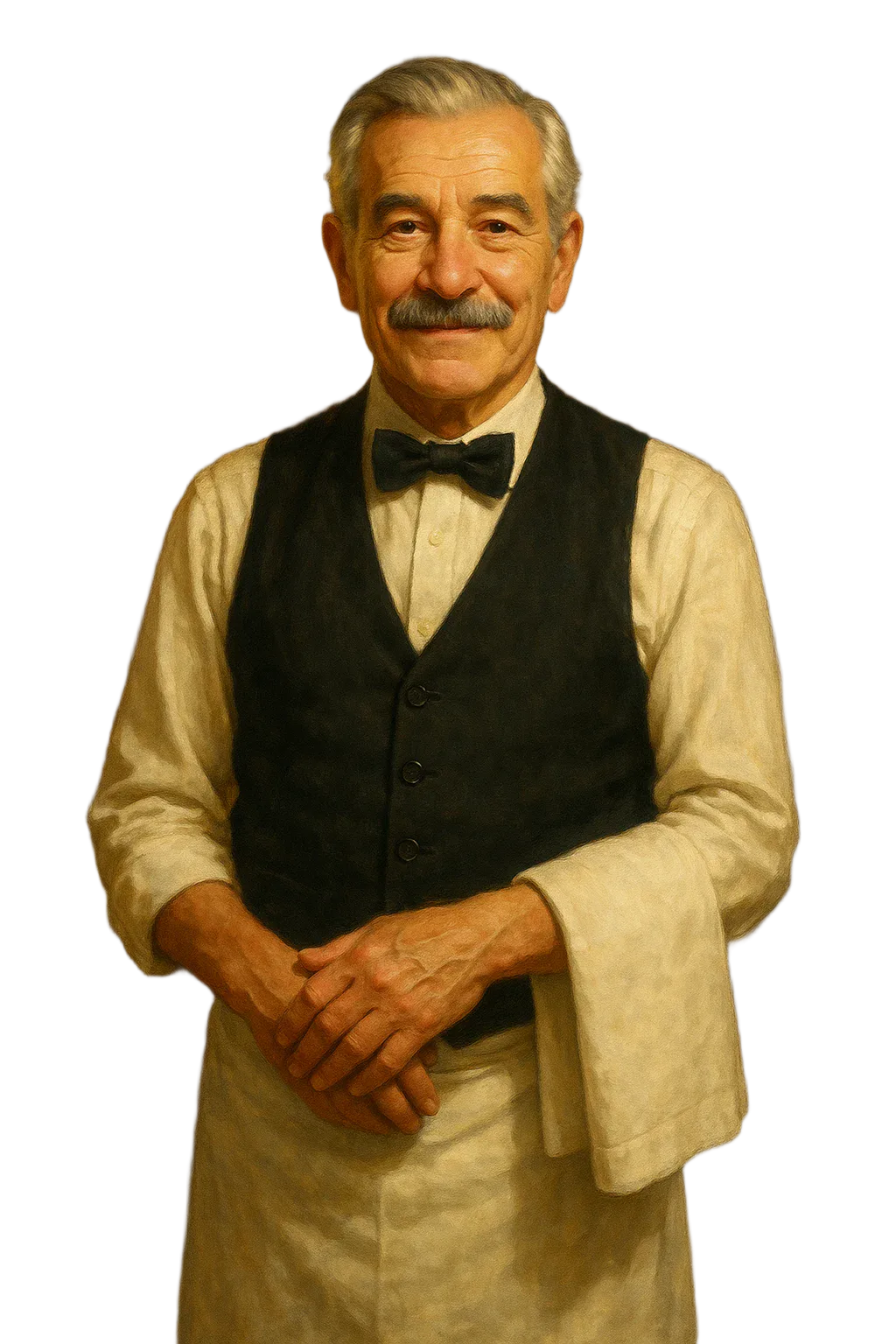
Rioplatense Spanish puts you on «vos» from the first word — vos tenés, vos querés, vení, decime — and turns «ll» and «y» into «sh» or «zh», so calle comes out «cashe». Óscar has carried the tray at a café notable on Avenida de Mayo for forty-five years, has never written down an order, and leaves you the table as long as you want it: «acá nadie te apura».
Buenas. ¿Qué vas a tomar?
How Buenos Aires actually talks
What you'll pick up
- Voseo from the first word — vos tenés, vos querés, vení, decime — with «ustedes» for plural «you» and never a «vosotros»
- The porteño «sh» or «zh»: calle sounds like «cashe», yo like «sho» — the sound that gives the accent away
- Rioplatense café vocabulary: the cortado with its glass of soda, medialunas de manteca or de grasa, che, dale, ¿viste?
Where you'll practise in Buenos Aires
50 missions across 9 scenes and 1 guided tour. Each mission is a real errand with a goal, a person who talks back, and a debrief afterwards in your own language.
-
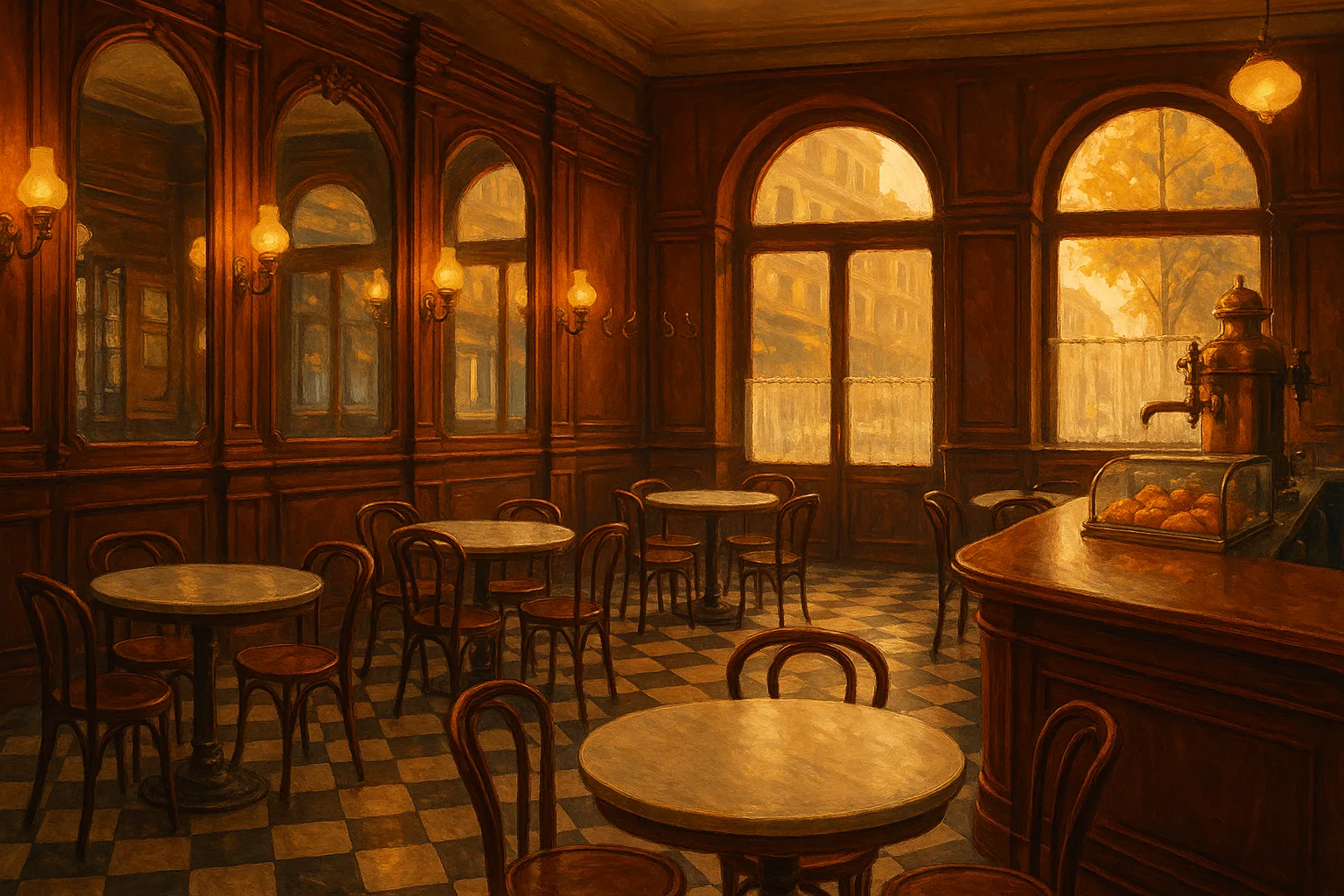
Café La Porteña café
Óscar, Veteran mozo at a Buenos Aires café notable · 6 missions · A1–C1
- One coffee A1 — Order a single coffee at a historic Buenos Aires café and pay. Your first vos, your first cortado.
- The classic order A2 — Café con leche, medialunas — manteca or grasa? — and a water. The full porteño café ritual, guided.
- The substitution B1 — They're out of medialunas de manteca. Follow the mozo's alternatives, pick a plan B, and pay like a local.
+ 3 more at this scene
Start speaking — free → -
Alimentos Cardal — la oficina de Mabel oficina
Mabel, Operations manager who runs the hiring at a small food company in Buenos Aires · 7 missions · A1–C1
- Vengo por la entrevista A1 — Name, reason, time, person. The four sentences that get you through any office door.
- ¿En qué consiste? A2 — What's the job, what are the hours, what does it pay, when does it start. Four questions, four numbers, all of them said back.
- La entrevista B1 — Your experience, your gaps, your reason — and the question she asks everyone: tell me about something that went wrong.
+ 4 more at this scene
Start speaking — free → -
Farmacia del Ombú farmacia
Gustavo, Pharmacist and owner of a neighbourhood farmacia in Villa Crespo, Buenos Aires · 5 missions · A1–B2
- Headache A1 — Ask the pharmacist «¿tenés algo para el dolor de cabeza?», pick one, and pay.
- Sunscreen & band-aids A2 — Buy sunscreen and curitas at a Buenos Aires farmacia — pick the factor, pay by card.
- A cold B1 — Describe your resfrío, get advice, and find out what «obra social» and «particular» mean at the till.
+ 2 more at this scene
Start speaking — free →
Explore all 9 scenes
-
Hotel Las Glicinas hotel
Luján, Front-desk receptionist at a small hotel in an old San Telmo house, Buenos Aires · 5 missions · A1–B2
- Reservation A1 — Say «tengo una reserva», give your name and passport, and take your key at a San Telmo hotel.
- Check-in A2 — Arrive at an old San Telmo house turned hotel — reservation, passport, suitcases, key, and the breakfast hours.
- Check-out B1 — Last morning in San Telmo: ask for a late check-out, leave your suitcases, get to La Boca, and pay.
+ 2 more at this scene
Start speaking — free → -
Kinesiología Sanguinetti consultorio de kinesiología
Vero, Kinesióloga with a small street-level practice in Caballito, Buenos Aires · 6 missions · A1–C1
- Pedir un turno A1 — Your name, where it hurts in two words, whether you have the doctor's note, and one of two days. Five short sentences and you're done.
- ¿Desde cuándo? A2 — Where, how long, how often, what makes it worse — «hace tres semanas», «solo cuando…». Invent the injury; the timings are the point.
- Conocer a Vero B1 — Nine years in an old laundry, a torn ligament at twenty-seven, forty pensioners in a hall, and a father who won't do his exercises.
+ 3 more at this scene
Start speaking — free → -
Kiosco La Esquina kiosco
Rubén, Kiosquero at a corner kiosco by a subte entrance in Palermo, Buenos Aires · 5 missions · A1–B2
- Top up A1 — «Cargame la SUBE»: top up your Buenos Aires transit card at the kiosco by the subte.
- SUBE card A2 — Buy and load a SUBE card at a kiosco by the subte, and ask the way to Plaza de Mayo.
- Get to know Rubén B1 — A former bus driver turned kiosquero: his barrio, his family, Boca, and the trip he's saving for.
+ 2 more at this scene
Start speaking — free → -
La Milonga de Plaza Dorrego milonga
Norma, Veteran milonguera and host of the Sunday open-air milonga at Plaza Dorrego · 6 missions · A1–C1
- Say yes to the práctica A1 — Norma invites you to her Tuesday práctica at Club Unión. Say yes, catch the time, and say the plan back.
- First night A2 — Strung lights, Di Sarli on a crackly speaker. Greet the host, admit you're new, take the seat she offers — and answer one question.
- Your first tanda B1 — Norma talks you through your first steps — adelante, atrás, la pausa. Confirm each instruction, and ask her to slow down when you're lost.
+ 3 more at this scene
Start speaking — free → -
Parrilla El Fogón parrilla
Raúl, Parrillero at a Buenos Aires neighborhood parrilla · 4 missions · A2–B2
- Order a steak A2 — A bife de chorizo at a neighborhood parrilla — pick your cooking point and a side, guided by the grill master himself.
- Grill for two B1 — A parrillada mixta for two: choose your cuts, take a stand on morcilla, meet the house chimichurri, and pay.
- Get to know Raúl B1 — A quiet hour at the grill. Draw out the Sunday fires in Lanús, Don Tito's tongs, the secret chimichurri, and his vet-student daughter.
+ 1 more at this scene
Start speaking — free → -
Taller Colombo taller mecánico
Néstor, Mechanic and owner of a neighborhood garage in Buenos Aires · 6 missions · A1–A2
- Meet Néstor A1 — Nothing to fix. Trade names with the mechanic, ask about his taller, and say where you're from.
- Car won't start A1 — Your car died near the garage. Tell Néstor «no arranca», answer his either/or questions, and get him to come look.
- Asado invitation A2 — Néstor invites you to the Sunday asado at the taller. Get the day, the time, what to bring — and say the plan back.
+ 3 more at this scene
Start speaking — free →
Tours
- Sabores de Buenos Aires with Camila, Food-tour guide in Buenos Aires — 5 stops: Café con leche y medialunas, Empanadas: salteñas y porteñas, Choripán y asado, Pizza porteña: fugazzeta y fainá and Helado artesanal: dulce de leche granizado.
Words that change in Buenos Aires
Óscar speaks the way Buenos Aires does, not the way a textbook does. A few of the swaps you'll hear from the first minute — the full list lives in the app's «Talk like a porteño» guide:
| They say | It means | You'll hear |
|---|---|---|
| palta | avocado elsewhere: aguacate | Un tostado con palta, por favor. From Quechua — "aguacate" sounds foreign in Argentina. |
| frutilla | strawberry elsewhere: fresa | Un licuado de frutilla, porfa. Ask for "helado de frutilla", not "de fresa". |
| colectivo | (city) bus elsewhere: autobús | Tomo el colectivo hasta San Telmo. The everyday word; friends shorten it to "el bondi". |
| subte | subway elsewhere: metro | El subte te deja a dos cuadras. Short for "subterráneo" — Buenos Aires' metro, the oldest in Latin America (1913). |
| remera | t-shirt elsewhere: camiseta | Me compré una remera de Boca. "Camiseta" in Argentina leans toward a football jersey specifically. |
| pollera | skirt elsewhere: falda | Esa pollera te queda bárbara. Everyday Argentine word; "falda" is understood but not local. |
| vereda | sidewalk elsewhere: acera | Los cafés ponen mesitas en la vereda. Café-on-the-vereda is half of porteño life. |
| nafta | gasoline elsewhere: gasolina | Paramos a cargar nafta. "Gasolina" will get you a puzzled look at an Argentine station. |
- boludo/a — dude (peers ONLY) Between warmed-up friends it's affection; to anyone else it's an insult. When in doubt, don't.
- laburo — work / a job From Italian "lavoro" — the verb is "laburar". Lunfardo at its most everyday.
- guita — money Classic lunfardo for cash.
- copado — cool / great Praise for things and people; "re copado" doubles it.
How Argentina says 27 everyday words — next to what seven other Spanish-speaking countries say for the same thing, with a cited source for every filled cell. Or see all the words, eight ways.
Questions people ask about Buenos Aires
Which Spanish will I hear in Buenos Aires?
Rioplatense (Argentine) Spanish. Óscar and the other locals in the Buenos Aires scenes speak the way people in Buenos Aires actually speak — accent, pace, register and vocabulary. They'll say palta for avocado, frutilla for strawberry and colectivo for (city) bus, and the coach tells you when a word is local rather than universal. For the vocabulary side, see how Argentina says everyday words next to seven other countries at /spanish/argentina/.
Do I need to speak Spanish already?
No. Missions in Buenos Aires run from A1 (first words: greet, order, ask for the bill) to C1 (argue a point, handle a complication, hold a real conversation). You pick a level, the scene meets you there, and the coach explains anything you missed in your own language.
What will I actually do in the Buenos Aires scenes?
50 missions across 9 scenes — Café La Porteña, Alimentos Cardal — la oficina de Mabel, Farmacia del Ombú and Hotel Las Glicinas and more. Each mission is an errand with a goal: order, negotiate, describe a symptom, get directions, small-talk your way through a wait. The person you're talking to has their own agenda, so it never goes exactly to script. There is also a guided tour — Sabores de Buenos Aires — where the guide talks and you ask.
Is it free?
You can start speaking without creating an account. A free account keeps your notebook and progress and comes with 10 minutes of live conversation a week, refilled every Monday; the app tells you where you stand.
How does the feedback work?
Óscar answers in Spanish, and a separate coach watches the conversation and flags what to fix — grammar, a word choice that isn't Buenos Aires's, pronunciation — in your language, without interrupting the scene. Words you didn't know go into your notebook with the Buenos Aires pronunciation, and after each mission you get a debrief you can review.